

The Kitchen Network. Episode 4 by Luiza Prado
Antic Teatre, Barcelona
Date: 24/3/2026, 8 pm

Welcome to The Kitchen Network!
The Fourth episode takes place in Barcelona!
Unfolding as an episode in the last reality TV food competition on earth, this performance uses humour to examine the divide between online food cultures and their disconnection to wider issues of class, gender and geography.
In this episode we step into a future where the European Union has dissolved, climate policy has failed, and old trade agreements have fractured. The promises of the European Green Deal remain unfinished across a continent marked by material scarcity, even as digital culture continues to project images of abundance.
Across Spain, farmland competes with data centers built to sustain cloud computing and AI. Water is diverted between crops and cooling systems; rural regions strain, cities expand, and digital infrastructure reshapes the landscape. In the absence of coordinated governance, spectacle becomes policy.
Food distribution is now governed by the Eurovision Exchange Agreement (EEA): each year, the country that wins Eurovision gains temporary authority over continental food allocation. Spain, the most recent winner, occupies a precarious position of relative abundance within an unequal and unstable Europe.
Water is tightly controlled, commodified, and unevenly distributed. This episode is sponsored by Blue Reserve, a premium hydration brand. Each contestant receives just two bottles to last the competition, as the AI host reminds viewers: “Because Not Everyone Gets a Second Pour.”
With elderly residents from the surrounding neighborhood serving as judges, The Kitchen Network stages cooking as performance in a time of scarcity, reflecting on inequality, digital expansion, and the politics of food in a fragmented Europe.

About the The Kitchen Network & Luiza Prado
The Kitchen Network is a theatrical performance that continues Luiza Prado’s ongoing investigation of the necropolitical infrastructures around reproduction, nourishment, and planetary collapse.
The event taking place at Antic Teatre in Barcelona on March 24, 2026 corresponds to the fourth episode of the series, which continues and completes the research developed by the artist while adapting to each specific context. The first episode, presented within the framework of Transmediale in Berlin (January 2024), emphasized the technological aspects of the project. The second, held in Nottingham (April 2024), focused on the kitchens of migrant communities. The third, presented at the restaurant of the Martin Gropius Bau in Berlin (October 2024), addressed labor and movement through the universe of the sandwich—a food associated with work rhythms and whose culinary origins point to non-native traditions.
In The Network Kitchen. Episode 4
Concept and direction: Luiza Prado
Master of Ceremonies: Albert Sánchez
Cook # 1: Monica Escudero
Cook # 2: Agnes Essonti Luque
Cook # 3: Irene Arcas
Jury: Old ladies from the community of the Antic Teatre
The Kitchen Network. Episode 4 is a produced by A*DESK.
We don’t just have a close relationship with water: we are water. 70% of our bodies and 71% of the planet are water, but only 2% is freshwater. Water is a finite resource that circulates, regenerates, and transforms, but cannot be created. The natural cycle can no longer keep pace with global demand: if in 1900 humanity consumed about 670 km³ annually, today it consumes nearly 4,000[1]. We are, therefore, facing an ecological crisis that challenges the way we consume and manage this common good, which is also a human right.
The renewable water available—from rain, aquifers, reservoirs, or tanks—depends on a complex infrastructure for collection, transportation, and treatment: wells, canals, desalination plants, and wastewater treatment plants. All of this forms a vital network that sustains human life, but also industrial, agricultural, and energy resources. It is no coincidence that the 2025 Venice Architecture Biennale placed water at the center of the debate: while the Catalan Pavilion championed radical imagination as a tool to address its crisis, Benedetta Tagliabue’s project, The Architecture of Virtual Water, made the invisible water footprint visible.
Drinking, eating, producing, and moving around require water. Therefore, almost all countries have Water Laws that regulate usage rights, quality, services, and tariffs, as well as the protection of rivers and lakes. Despite being a free resource, its treatment and distribution entail high costs. In many territories, scarcity and unequal access have generated tensions (water wars) that cross borders: this is the case with the conflicts around the Tigris and Euphrates, the Crimean Canal, Lake Chad, and the Eastern Mediterranean, as well as of abuses by transnational corporations in strategic economic sectors, which cause a negative impact on the environment and the affected communities[2].
Given this scenario, it is necessary to imagine hydro-social pacts[3] that integrate scientific, community, and environmental knowledge to ensure sustainable and fair management. As Yayo Herrero[4] argues, recovering the memory of the five elements—water, air, earth, fire, and life—is essential to rethinking our relationship with the world. Water is a resource, a metaphor, and a memory; a force that shapes territories, bodies, and relationships.
Within this framework, Water Cartographies proposes a journey through four artistic practices that transform water into a device of perception, a historical trace, a genealogy of the body, and a tool of resistance. The exhibition unfolds as a confluence of perspectives that link ecology, spirituality, technology, and care. The works invite us to pause, to listen to the passage of time and the body, to perceive liquidity as a space of relationship and shared memory.
Anna Dot. Libacions [Libations] (2022–ongoing)
Libations is a project consisting of a series of ceramic pateras and collective actions. It is inspired by Greek libation rituals, in which water or wine was poured in honor of the deceased. The vases, decorated with local flora and fauna, have been activated in Paris, Villava, and Sant Martí d’Empúries. In this latest action, included in the exhibition Waters, Languages, and Forgetfulness (Museo del Mediterráneo, 2024), the libations followed the historical path of the Ter River, from Colomers to the Mediterranean, paying homage to an ancient branch of the river now reduced to irrigation canals. Libations combines research, poetic gesture, and community, reminding us that every drop contains a story.
Caterina Miralles Tagliabue. 0.5 (2025)
0.5 is an audiovisual installation that contrasts the technological intelligence of climate research centers with the wisdom of the fishermen of the Venetian Lagoon. The title, “0.5 cm,” alludes to the annual rise in water levels, a symbol of the impact of the Anthropocene. Divided into four thematic sections, it combines data, stories, and landscapes to reflect on ecology, memory, and the coexistence of human and non-human forms of knowledge. The work becomes a space for observation and listening where scientific information and traditional wisdom converge in a single flow.
Fina Miralles. Mar, cel i terra [Sea, Sky, and Earth] (1973) and El retorn [The Return] (2012)
Key figure of the Catalan conceptual art, Miralles has explored the direct relationship between body and nature through actions with earth, grass, stones, and water. Sea, Sky, and Earth is a collage that combines words and images—sea, sky, cloud, rain, sun—to allude to the ecosystem as a living unit. The Return is the photographic record of a later action that directly connects with those carried out in the 1970s (Relationships. The Body’s Relationship with Water. The Body in the Sea) and also relates to his work on the figure of women, the fountain, the sea, and women of water as forms of ancestral memory. As the artist says: “What is important is the water that sings, the living water. The water sings, the birds sing, the mermaids, the whales, and we sing.”[5] His work invites us to relearn how to listen to this primal song, as an act of affirmation and grounding.
Stella Rahola Matutes. La Cronometradora [The Timekeeper] (2023)
The Timekeeper is an installation that turns glass into a metaphor for water and time. Through a translucent and breathing architecture, the work reflects on the artisanal and scientific process of the material, its porous and mutable nature. Rahola proposes a “drinkable” art, made of steam and light, that reminds us of the interdependence between matter, medium, and body. Her research connects tradition and innovation, manual knowledge and technology, and champions an artistic practice committed to sustainability and caring for the planet.
Thus, Water Cartographies traces an itinerary that combines sensitivity, knowledge, and commitment. The works assembled speak to the need to imagine a new water culture—a culture that recognizes water not as a resource to be exploited, but as a shared way of life. In times of climate emergency, these practices invite us to think from the perspective of flow, to understand that, like water, we too are part of an endless cycle of transformation and return.

[Water Cartographies is a group exhibition curated by Montse Badia, with the artists Anna Dot, Fina Miralles, Caterina Miralles Tagliabue, Stella Rahola Matutes, and presented at the Fundació Úniques 11/6/25 – 2/14/26]
[1] Paniagua, Jesús M. Agua. Historia, Tecnología y Futuro [Water. History, Technology, and the Future]. Ed. Guadalmazán, Madrid 2023.
[2] Arenal Lora, Libia (ed.), Negocios insaciables: Estados, Transnacionales, Derechos humanos y Agua. [Insatiable Business: States, Transnational Corporations, Human Rights, and Water]. Ed. Fundación para la Cooperación APY Solidaridad en Acción, 2015.
[3] Cerarols Ramírez, Rosa. “Hydrosocial Pact” at 100 words for the water: a vocabulary. (Ed. Eva Franch i Gilabert, Mireia Luzárraga, Alejandro Muiño). Catalog Catalonia in Venice. Water Parliaments. Collateral Event of the 19th International Architecture Exhibition _ La Biennale di Venezia. Lars Müller Publishers, Institut Ramon Llull and Col·legi d’Arquitectes de Catalunya (COAC), 2025
[4] Herrero, Yayo. Los cinco elementos. Una cartilla de alfabetización ecológica. [The Five Elements: An Ecological Literacy Primer] Arcàdia Editors. Barcelona, 2021.
[5] Fina Miralles in conversation with Mireia Sallarès. “The water sings, we sing”. Video-interview. Fons #06 MACBA, 2021
“Unveiling the structures of power and control through photography” is the leitmotif of Paula Artés’s work. Starting with a background in photography, her practice has progressively shifted its focus toward the research process, incorporating methodologies from critical and political analysis. In the systems she examines, she identifies mechanisms of power and control that operate from a distance, invisibility, or intangibility.
In various projects he has addressed the opacity of a state body, the Civil Guard, understood as an operational system of police control (Fuerzas y cuerpos [Forces and bodies], 2016-2018); the exploitation of the natural environment and the forms of regulation exercised by large oligopolies (Energía sumergida [Submerged energy], 2018-2024; El caudal del río [The flow of the river], 2021-2025); or the VIP space in a sporting context as a place of agreements with great political and economic impact (Palco de honor [Honorary box], 2025), to mention only a few.
Firma, [Sign,] (2017-2019) is not her most recent work, although the passage of time has added new layers of meaning. Begun as a final year project under the supervision of Tanit Plana and Marta Dahó, Firma, marks a turning point in Artés’s work by giving central weight to research as a constitutive part of the piece. Firma, is structured around a series of direct and profoundly political questions: What does the State know about us? How much personal information does it manage? From where does it exercise control? What use does it make of this data? These questions serve as catalysts to sharpen our position as critical citizens.
The exhibition, titled Firma, focuses on official spaces that collect and manage our data—medical centers, civil registries, funeral homes, libraries, post offices—which the artist photographs using a large-format camera and an analog process. The images depict anonymous, prototypical, and perfectly interchangeable places, devoid of any trace of human presence. The carefully chosen framing evokes dead ends: spaces without exits, corridors without vanishing points, permeated by a Kafkaesque atmosphere. These are images that reflect the bureaucratic aspects of our lives, now indistinguishable from the vital ones.
In parallel, Artés compiles a large number of documents from these same spaces, forms requesting personal information that repeatedly culminate in the same imperative verb: “sign.” Sometimes accompanied by a comma intended to soften the command, other times followed by a colon, but always stated as a mandate. A seemingly banal gesture that condenses the transfer of rights, data, and responsibilities into a single act.
Photographs and documents thus create a portrait of the state’s administrative structure as a contemporary panopticon. Bentham’s prison design (a central tower from which inmates are watched without their knowledge) and its reformulation by Michel Foucault, as a technology of power extendable to the whole of society, acquire new significance in the context of accelerated digitalization, especially since the 2020 pandemic.
The artist’s book(1) that is part of the project includes a revealing conversation between Paula Artés and Gemma Galdón Clavell, PhD in security and technology policy and public policy analyst. It reflects on how the modern state is founded on data management as a form of organization and control, and how bureaucracy plays a key role in its historical constitution.
With digitalization, this capacity for control increases exponentially. The data we voluntarily provide is intertwined with that collected involuntarily, generated by our daily activities, from the purchases we make to the routes we take, the services we use, and the platforms we consult. We are more monitored, but less aware of it, and paradoxically, we have less control over our own data.
The technofeudalism (2) described by Yanis Varoufakis is no longer a theoretical abstraction but a palpable reality. The primary purpose of digital data infrastructures is not to make our lives easier or expand our rights, but rather to maximize the profitability of large global technology corporations.
The spaces photographed by Paula Artés still exist, although their functions have been radically transformed. It is no longer necessary to physically travel to complete a transaction: one or a few clicks are all it takes. Data then ascends to what we call “the cloud,” a poetic and seemingly innocuous term that masks the proliferation of physical data centers, which are highly resource-intensive, especially in terms of water and electricity, with an increasingly evident ecological and geopolitical impact.
The disappearance of physical space does not imply the disappearance of control, but rather its intensification. Power no longer needs monumental architecture or a visible presence; it operates in a distributed, opaque, and automated manner. Bureaucracy, far from diminishing, becomes more efficient, faster, and more difficult to challenge. The act of signing, now transformed into accepting, checking a box, or swiping a finger, occurs more frequently and with less awareness of its consequences. This signature places us before a central paradox of contemporary democracies: the more streamlined administrative systems become, the less room there is for dissent. Consent becomes a formality, and responsibility shifts to the individual, while the infrastructures of power remain outside our field of vision. Invisibility thus becomes a fundamental political strategy. What is not seen is not questioned, and what is not questioned becomes normalized.
In this sense, Paula Artés’s project traces a critical cartography of the present, in which control is not imposed by force, but rather managed through protocols, interfaces, and administrative languages that we have learned to accept as inevitable.
Understanding these mechanisms, making them visible, and naming them is a profoundly political act. It does not guarantee emancipation, but it is an indispensable condition for imagining it. Because only that which is understood can be questioned, and only that which is questioned can, eventually, be transformed.
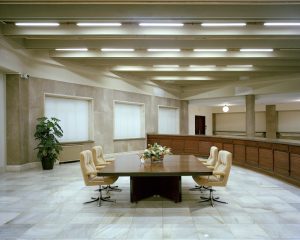
[This text accompanies the exhibition Firma, by Paula Artés at the Centre Cultural Melchor Zapata, Benicássim. 19 February – 26 April 2026]


