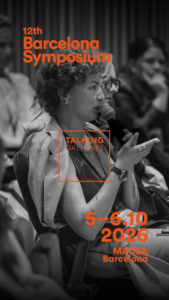
This year’s programme will address some of the key questions shaping galleries and the art market today: from the evolving role and relevance of galleries and the motivations of next-generation collectors to the changing online art market, the current state of digital art, and the growing intersections between art and luxury.
Alongside these debates, the Symposium will continue to place the experience of gallerists at the heart of the programme, with conversations exploring how distinctive gallery programmes are shaped and sustained over time, as well as dedicated interviews reflecting on the careers of leading international gallerists.
With the participation of: Ignasi Aballí (artist), Georgina Adam (journalist and author), Montse Badia (Art Historian and Critic), Jennifer Chert (ChertLüdde), Carolina Ciuti, (Curator/exibart.es), Massimo De Carlo (MASSIMODECARLO), Natasha Degen (Sotheby’s Institute of Art, New York), Michael Elmgreen (Elmgreen & Dragset), Pau Escat (Escat Gallery), Alexander Forbes (Artsy/Artnet), Marc Francés (collector), Victor Gisler (Mai 36 Galerie), Carles Guerra (curator and researcher), Llucià Homs (Talking Galleries), Phin Jennings (writer and researcher), Samuel Leuenberger (curator/SALTS), Mischa Lustin (Galerina), Pedro Maisterra (Maisterra), Divya Pande (Victoria Miró), Rosario Peiró (Museu Picasso Barcelona), Miguel Ángel Sánchez, (ADN Galeria), Tom Seymour (The Art Journal), Pau Waelder (Niio Art), and Jocelyn Wolff (Galerie Jocelyn Wolff).
Location: Auditori Meier, MACBA Museu d’Art Contemporani de Barcelona (Plaça del Àngels, 1, Barcelona).
Admission is free, but registration is required as seating is limited. Register here
Organized by CIMAM (the International Committee for Museums and Collections of Modern Art) in collaboration with MACBA Public Programs, this panel will explore what ethical principles should guide the management of a museum collection today.
Museum collections are among the most important cultural assets entrusted to museums. Yet recent international cases have revealed how vulnerable they can become when governance structures change, ownership shifts, or political and economic interests take precedence over their long-term stewardship.
As museums navigate increasingly complex questions around acquisition, stewardship, provenance, restitution, access, sustainability, and accountability, collection management is being redefined as a fundamentally ethical practice rather than solely a technical or administrative one.
Recent developments, including the newly adopted ICOM Code of Ethics, highlight the growing importance of public trust, cultural rights, community participation, transparency, and responsible stewardship in shaping decisions about collections.
In this conversation, Doryun Chong, Chair of CIMAM’s Museum Watch Committee and Artistic Director and Chief Curator of M+, Hong Kong; Amanda de la Garza, President of CIMAM and Deputy Artistic Director of the Museo Nacional Centro de Arte Reina Sofía, Madrid; and Claudia Segura, Head of Collection at MACBA, Museu d’Art de Contemporani de Barcelona, will explore the particular challenges faced by modern and contemporary art museum collections.
Moderated by Montse Badia, art historian, critic, curator, and cultural researcher based in Barcelona, this panel will also consider how museums can respond to increasingly complex political, economic, and institutional contexts while protecting collections as bodies of knowledge and ensuring their long-term public value.
These are the same questions that have prompted CIMAM to launch a new international research initiative to develop aGlossary on Ethical Principles for Collection Management.
Invited Speakers:
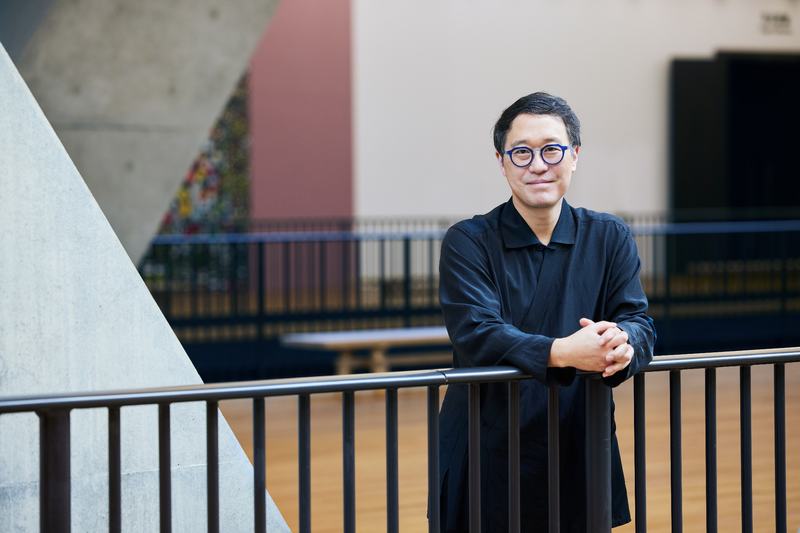
Doryun Chong
Doryun Chong, Artistic Director and Chief Curator, M+, Hong Kong SAR, China. Photo: Dan Leung. Image courtesy of M+, Hong Kong
Doryun Chong is Artistic Director and Chief Curator, M+, Hong Kong, Asia’s first global museum of visual culture of the 20th and 21st centuries. He joined M+ in September 2013 as its inaugural Chief Curator and also became Deputy Director, Curatorial in January 2016. Since October 2024, he has served as Artistic Director. He oversees all content-related aspects, including exhibitions, collections, learning and interpretation, publishing, and digital content, across the museum’s three main disciplinary areas of design and architecture, moving image, and visual culture.
Before joining M+, Chong developed his museum career in the United States. He studied art history and anthropology at the University of California, Berkeley, where he also completed graduate work in art history focused on non-Western modern and contemporary art, particularly in East Asia. He has held curatorial positions at the Asian Art Museum of San Francisco, the Walker Art Center in Minneapolis, and the Museum of Modern Art in New York.
Amanda de la Garza Mata (Mexico, 1981) Lives and works in Madrid, Spain.
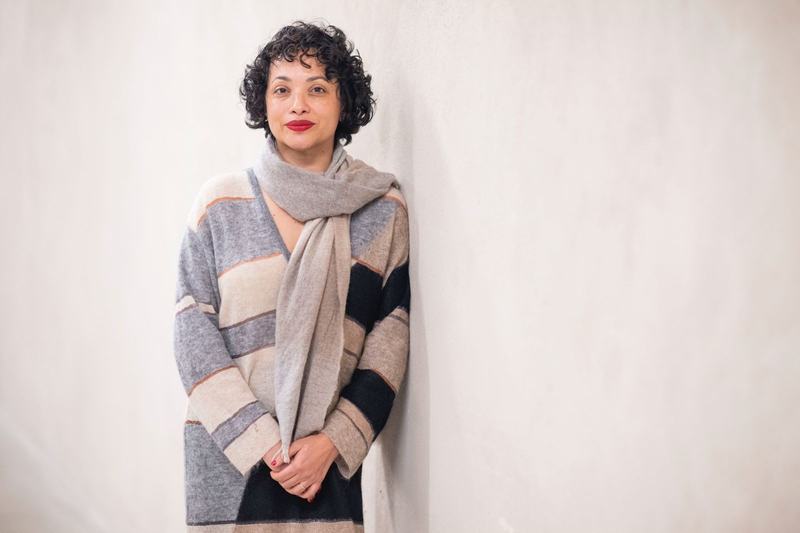
Amanda de la Garza. Deputy Artistic Director, Museo Nacional Centro de Arte Reina Sofía (MNCARS), Madrid, Spain
She is currently Deputy Artistic Director at Museo Nacional Centro de Arte Reina Sofía in Madrid. She is the President of CIMAM (International Committee for Museums and Collections of Modern Art) for the period 2026-2028. From 2020 to 2024, she was General Director of Visual Arts and of the University Museum of Contemporary Art (MUAC) at UNAM in México City, one of the most important art museums in Latin America. Trained in Curatorial Studies, Art History, Anthropology and Sociology, between 2012 and 2019 she worked as an associate curator at MUAC. She has curated and coordinated more than 30 exhibitions of modern and contemporary art, archival exhibitions, and public art projects. She has published essays, interviews and reviews in catalogues, books and specialized magazines. She was a member of the board of ICOM Mexico from 2021 to 2024.
Claudia Segura Campins
Claudia Segura Campins (Barcelona, 1984) is currently Head of Collection at MACBA (Museu d’Art Contemporani de Barcelona), following her role as Curator of Exhibitions and Collection at the same institution since 2019. Her curatorial work includes several presentations of MACBA’s Collection, as well as numerous solo exhibitions, most notably the first monographic exhibition of performance artist María Teresa Hincapié.
She holds a BA in Humanities from Pompeu Fabra University in Barcelona (2007) and an MA in Contemporary Art Theory from Goldsmiths, University of London (2008). From 2015 to 2019, she was Director and Chief Curator of NC-arte in Bogotá, Colombia, where she curated numerous site-specific projects by artists such as Amalia Pica, Luis Camnitzer, Xavier Le Roy, Nicolás Paris, Nicolás Consuegra, Los Carpinteros, Do Ho Suh, and Alia Farid, among others.
Previously, she worked as a cultural project coordinator at Fundación “la Caixa” in Barcelona (2010–2012), served as an external curator for the Mardin Biennial in Turkey (2014–2015), and acted as mentor at the Sala d’Art Jove in Barcelona (2014) and at the Cano Laboratory at the National University Museum in Bogotá (2018). She was also a visiting lecturer at the Universidad de los Andes in Bogotá (2017).
She has curated projects in Spain, Colombia, Los Angeles, Chicago, Mexico City, Turkey, Lisbon, Miami and London. She frequently contributes to exhibition catalogues, gives lectures, and writes for specialized art publications.
Moderator:
Montse Badia
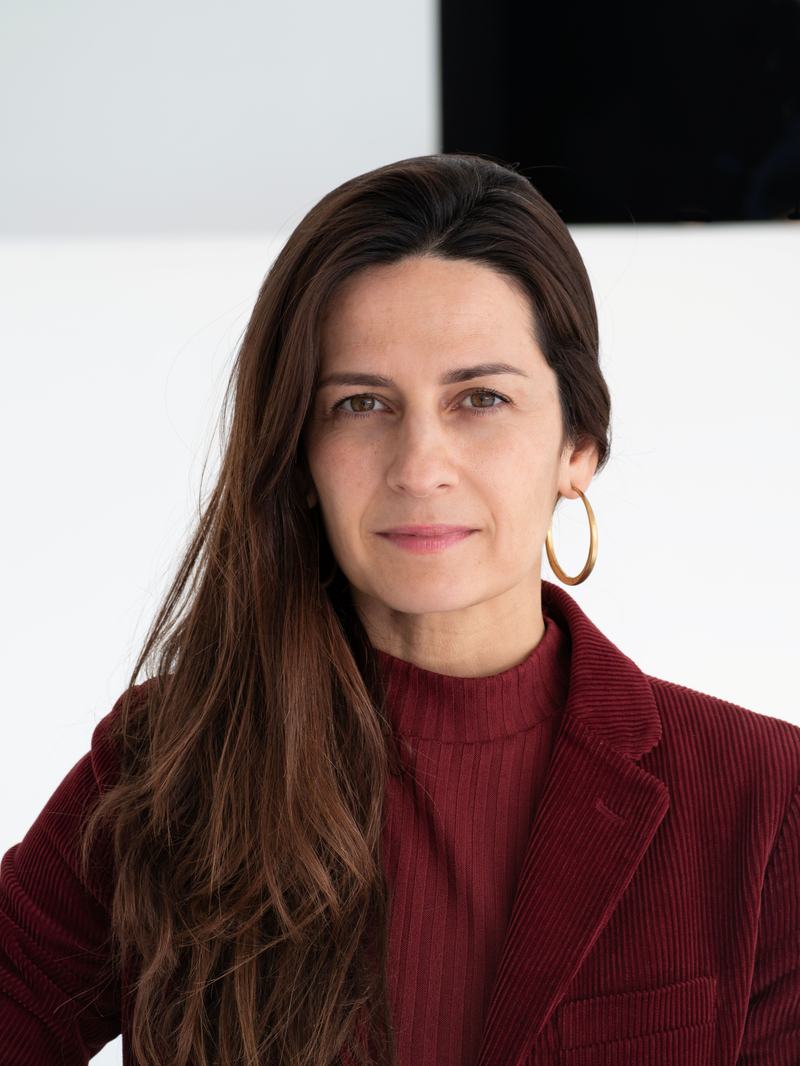
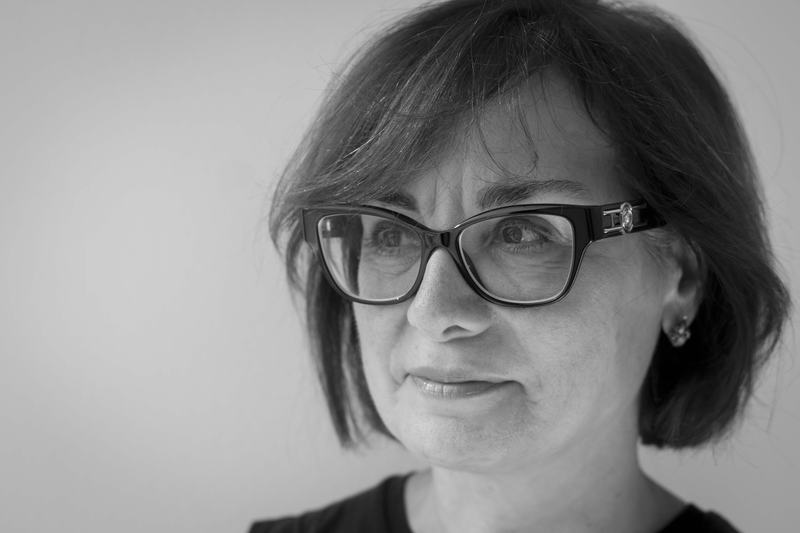
Montse Badia. Photo by Agus Izquierdo.
Montse Badia is an art historian, critic, curator, and cultural researcher based in Barcelona.
She has contributed to numerous international publications, including Transversal, arts.zin, Untitled (London), NU: The Nordic Art Review (Stockholm), Tema Celeste (Milan), ARCO, and Bonart. Her curatorial work has been presented at institutions including De Appel (Amsterdam), Apexart (New York), Künstlerhaus Bethanien (Berlin), Fundació Joan Miró, MACBA – Museu d’Art Contemporani de Barcelona, MNAC – Museu Nacional d’Art de Catalunya and Fundación “la Caixa”, among others. She has served as associate curator of Espai 13 at Fundació Joan Miró and of the Centre d’Art Santa Mònica. She has also been a member of the advisory committee of the Yaxs Foundation and artistic director of the contemporary art collection Cal Cego.
She is co-founder and director of A*DESK. Independent Institute of Criticism and Contemporary Art, and director of the Master’s Degree in Contemporary Art: Context, Mediation and Management at IL3 – Universitat de Barcelona.
Recently she has also participated in several studies on the Catalan contemporary art ecosystem commissioned by CONCA (Catalan National Council for Culture and the Arts) and served as rapporteur for the framework document on remuneration standards for visual arts professionals promoted by the Government of Catalonia.
Montse Badia is a member of AICA (International Association of Art Critics) and ACCA (Catalan Association of Art Critics).
1st Plenary Session of the Public System of Visual Arts Facilities
Culture and Rights for Democratic Health
MACBA Convent Auditorium – June 30, 2026.
This event is structured around two interconnected themes.
The first explores the relationship between the visual arts and individual, social, and community health.
The second addresses cultural rights as inalienable rights for everyone.
Both dimensions converge on a shared conviction: culture acts as an active force against distress, individualistic withdrawal, and the rise of regressive trends.
Organized by: Directorate General for Cultural Rights, Creation, and Libraries, Department of Culture, Government of Catalonia.
Welcome and introduction by Xavier Fina, Director General for Cultural Rights, Creation, and Libraries.
Conversations:
• Art as an active force in medical and care settings. Conversation between Sergi Blancafort and Montserrat Verdú, with Pilar Cruz.
• Art and health through artistic practices. Conversation facilitated by José Antonio Delgado with Gemma Paris and Felipe G.
• Art as an active force for community health. Conversation between Javier Rodrigo and Quim Packard.
• Art for democratic health. Conversation facilitated by Amanda Cuesta with Mar Sureda and Nerea Campo.
• Economic health in artistic practices. Presentation on professional remuneration scales with Montse Badia and Ester Martínez.
Institutional closing remarks by the Hon. Sònia Hernández Almodóvar, Minister of Culture of the Government of Catalonia.
Montse Badia (Barcelona, 1965) is an independent curator and co-founder and director of the digital platform A*DESK. She studied Art History at the University of Barcelona and took part in the De Appel Curatorial Program in Amsterdam. She works in museums and art centres, independent venues and interventions in the public space, online and in print publications. Among her curatorial projects, ‘Screens and Pastilles’ at ADN Platform (2019) and the Geysers program at the Museu Nacional d’Art de Catalunya (MNAC) (2022-2024) stand out. Badia believes that the function of the curator is ‘to explore issues that are relevant to understanding the world and also to accompany artists in their processes of research and production, and be good interlocutors with the institutions’. In her work she addresses topics such as ‘the standardisation in which we live, the loss of rights and the analysis of the past to understand the present’. One of her benchmarks in curating is Valentín Roma, ‘for the way in which he approaches subjects of great importance and works with and from the context, without being exclusively local’. Badia believes that for art to flourish it needs ‘a good, uncomplicated cultural fabric, one that gives space to artists and cultural professionals to develop projects and create networks of exchange at the local, national and international levels’. For her, ‘the artist is someone who questions things, who looks at them from new perspectives and is receptive to tendencies in society, not to replicate them but to situate her- or himself in a shared present’. She recommends the artists Núria Güell and Enric Farrés-Duran.
NÚRIA GÜELL
Núria Güell (Vidreres, Girona, 1981) views her artistic practice as ‘a socially and politically necessary practice in which the cultural fact and the established are put into play’. Her work process starts with the research and analysis of data and situations, continues with the framing of questions and results in a proposal for action with real impact. She dige deep into issues that create friction while pointing to the legal interstices through which abuses of power or unjust conditions occur: the heritage as the object of illegal actions, financial dynamics linked to tax evasion, immigration laws, the fiscal privileges of the Catholic church, or the working conditions of artists, among others. www.nuriaguell.com
ENRIC FARRÉS DURAN
Enric Farrés Duran (Palafrugell, Girona, 1983) is a teller of stories in which reality and fiction meet and are modified. His work starts from research, coincidences, fortuitous encounters and the possibility of making connections between different places, objects, circumstances and temporalities. His projects may take the form of installations, objects, guided tours or publications. A couple of examples: In Order To Find, You Must First Learn To Hide (2018), a catalogue that is embodied by the artist himself, in the manner of the characters in the novel Fahrenheit 451; Glasses with Museum Glass to Showcase the World (2023), spectacles with special safety glass that questions the mechanisms of the gaze and the normativity associated with art.
Para ofrecer las mejores experiencias, utilizamos tecnologías como las cookies para almacenar y/o acceder a la información del dispositivo. El consentimiento de estas tecnologías nos permitirá procesar datos como el comportamiento de navegación o las identificaciones únicas en este sitio. No consentir o retirar el consentimiento, puede afectar negativamente a ciertas características y funciones.
Funcional
Always active
El almacenamiento o acceso técnico es estrictamente necesario para el propósito legítimo de permitir el uso de un servicio específico explícitamente solicitado por el abonado o usuario, o con el único propósito de llevar a cabo la transmisión de una comunicación a través de una red de comunicaciones electrónicas.
Preferencias
El almacenamiento o acceso técnico es necesario para la finalidad legítima de almacenar preferencias no solicitadas por el abonado o usuario.
Estadísticas
El almacenamiento o acceso técnico que es utilizado exclusivamente con fines estadísticos.El almacenamiento o acceso técnico que se utiliza exclusivamente con fines estadísticos anónimos. Sin un requerimiento, el cumplimiento voluntario por parte de tu proveedor de servicios de Internet, o los registros adicionales de un tercero, la información almacenada o recuperada sólo para este propósito no se puede utilizar para identificarte.
Marketing
El almacenamiento o acceso técnico es necesario para crear perfiles de usuario para enviar publicidad, o para rastrear al usuario en una web o en varias web con fines de marketing similares.