News

"News, interviews and publications"

Within the framework of the Visual Arts Promotion Plan, the Catalan Institute for Cultural Companies (ICEC)—through the SDE and in collaboration with the Panoràmic Festival—is organizing a professional event aimed at reflecting on the challenges facing contemporary cultural journalism and creating a space for dialogue among professionals, creators, and the public.

We are living through a period of profound transformation in the way public discourse circulates, and art criticism is no exception. Traditional newspapers and media outlets—which for decades served as the primary space for constructing, disseminating, and legitimizing critical judgment on contemporary art—have seen their influence as cultural tastemakers diminish. Today, a significant portion of the conversation surrounding the visual arts takes place through new digital channels and formats: specialized platforms, online magazines, podcasts, social media, newsletters, and independent projects—all of which have come to play an increasingly vital role in the creation and distribution of content.

This new landscape compels us to revisit some fundamental questions: Who performs the critical function today? Who shapes opinion and narratives regarding contemporary art? From what platforms do they speak, which audiences do they reach, and by what authority?

This event aims to explore these issues by drawing on the experiences of cultural journalists, managers of digital platforms, artists, and content creators who are actively involved in shaping contemporary cultural discourse. Beyond analyzing the evolution of cultural journalism and art criticism, the event seeks to provide tools for understanding how the mechanisms of mediation, influence, and legitimation are currently structured within the visual arts—and to examine the challenges this new ecosystem poses for the future of the sector.

Objectives

– To analyze the impact of digital transformation on cultural journalism and art criticism.

– To identify the agents, platforms, and formats currently involved in constructing discourse around the visual arts. – To debate the role of social media, podcasts, independent publishing projects, and other emerging spaces for cultural mediation.

– To reflect on current mechanisms of recommendation, authority, and critical legitimation.

– To share the experiences and perspectives of professionals working within these new ecosystems of cultural communication.


Program
09:40 – 10:00

Registration and welcome coffee
10:00 – 11:30

The artist as a media agent. How artists generate narratives and critical discourse without journalistic intermediation. Activism and the self-management of discourse.

– Daniel García Andújar. Visual artist, activist, and new media theorist.

– Clàudia Rius. Cultural journalist and editor-in-chief at *Núvol*.
11:45 – 13:15

From the newsroom to the feed: where criticism happens today. Has criticism changed its medium, its nature, or has it disappeared altogether?

– Joan Maria Minguet Batllori. Art historian and critic.

– Toni Ribas. Deputy director of the newspaper *Ara*.

– Carolina Ciuti. Cultural journalist and editor at *Exibart España*.
13:15 – 14:15

Lunch and networking
14:15 – 15:45

Curated digital platforms as spaces for criticism and dissemination. Independent platform models as alternatives to traditional spaces for cultural criticism and mediation. Who legitimizes discourse on art? Critical authority, algorithms, audiences, and the precarious nature of the sector.

– Montse Badia. Curator, art historian, and co-founder of A*Desk.

– Iván de la Nuez. Writer, essayist, and curator.

– Judith Méndez. Cultural communicator specializing in art history.

– Carmen Corbera. Creator and host of the podcast *El Mundo del Arte*.

→ Session moderated by Roberta Bosco, a journalist specializing in contemporary art.


30/11/2026. More information here
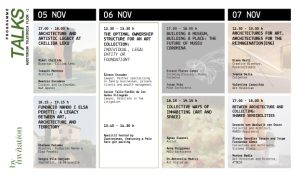
Pannel discussion: New strategies in visual arts programming, with Marco Scotini (Nuova Academia di Belle Arti), Jenny Nordquist (Landskrona Foto) and Martina Millà (Fundació Miró). Moderation: Montse Badia

Monday, November 9, 10:45 – 11:45 h.

Panoràmic Pro. Roca Umbert. Fàbrica de les Arts, Granollers.

In the context of  Festival Panoramic

Panel discussion: Between Architecture and Collecting: Shared Sensibilities with Gerardo van Waalwijk van Doorn, Álvaro González Cerezo and Jorge Fernández Gómez. Moderation: Montse Badia

Saturday, November 7, 17:00 – 18:00 h.


In the context of the Art Salon By Invitation

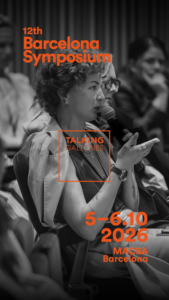
Talking Galleries returns to MACBA on 5–6 October 2026 for the 12th edition of the Barcelona Symposium, its flagship annual event bringing together gallerists and leading voices from across the art world for two days of debate, exchange and networking. 

This year’s programme will address some of the key questions shaping galleries and the art market today: from the evolving role and relevance of galleries and the motivations of next-generation collectors to the changing online art market, the current state of digital art, and the growing intersections between art and luxury.  

Alongside these debates, the Symposium will continue to place the experience of gallerists at the heart of the programme, with conversations exploring how distinctive gallery programmes are shaped and sustained over time, as well as dedicated interviews reflecting on the careers of leading international gallerists. 

With the participation of: Ignasi Aballí (artist), Georgina Adam (journalist and author), Montse Badia (Art Historian and Critic), Jennifer Chert (ChertLüdde), Carolina Ciuti, (Curator/exibart.es), Massimo De Carlo (MASSIMODECARLO), Natasha Degen (Sotheby’s Institute of Art, New York), Michael Elmgreen (Elmgreen & Dragset), Pau Escat (Escat Gallery), Alexander Forbes (Artsy/Artnet), Marc Francés (collector), Victor Gisler (Mai 36 Galerie), Carles Guerra (curator and researcher), Llucià Homs (Talking Galleries), Phin Jennings (writer and researcher), Samuel Leuenberger (curator/SALTS), Mischa Lustin (Galerina), Pedro Maisterra (Maisterra), Divya Pande (Victoria Miró), Rosario Peiró (Museu Picasso Barcelona), Miguel Ángel Sánchez, (ADN Galeria), Tom Seymour (The Art Journal), Pau Waelder (Niio Art), and Jocelyn Wolff (Galerie Jocelyn Wolff).


Rethinking Collection Governance: Ethics, Stewardship and Institutional Responsibility

  • Date: 18 September 2026
  • Time: 10:00 – 11:30 hrs.
  • Location: Auditori Meier, MACBA Museu d’Art Contemporani de Barcelona (Plaça del Àngels, 1, Barcelona).
  • Admission is free, but registration is required as seating is limited. Register here

Organized by CIMAM (the International Committee for Museums and Collections of Modern Art) in collaboration with MACBA Public Programs, this panel will explore what ethical principles should guide the management of a museum collection today.

Museum collections are among the most important cultural assets entrusted to museums. Yet recent international cases have revealed how vulnerable they can become when governance structures change, ownership shifts, or political and economic interests take precedence over their long-term stewardship.

As museums navigate increasingly complex questions around acquisition, stewardship, provenance, restitution, access, sustainability, and accountability, collection management is being redefined as a fundamentally ethical practice rather than solely a technical or administrative one.

Recent developments, including the newly adopted ICOM Code of Ethics, highlight the growing importance of public trust, cultural rights, community participation, transparency, and responsible stewardship in shaping decisions about collections.

In this conversation, Doryun Chong, Chair of CIMAM’s Museum Watch Committee and Artistic Director and Chief Curator of M+, Hong Kong; Amanda de la Garza, President of CIMAM and Deputy Artistic Director of the Museo Nacional Centro de Arte Reina Sofía, Madrid; and Claudia Segura, Head of Collection at MACBA, Museu d’Art de Contemporani de Barcelona, will explore the particular challenges faced by modern and contemporary art museum collections.

Moderated by Montse Badia, art historian, critic, curator, and cultural researcher based in Barcelona, this panel will also consider how museums can respond to increasingly complex political, economic, and institutional contexts while protecting collections as bodies of knowledge and ensuring their long-term public value.

These are the same questions that have prompted CIMAM to launch a new international research initiative to develop a Glossary on Ethical Principles for Collection Management.

Invited Speakers:

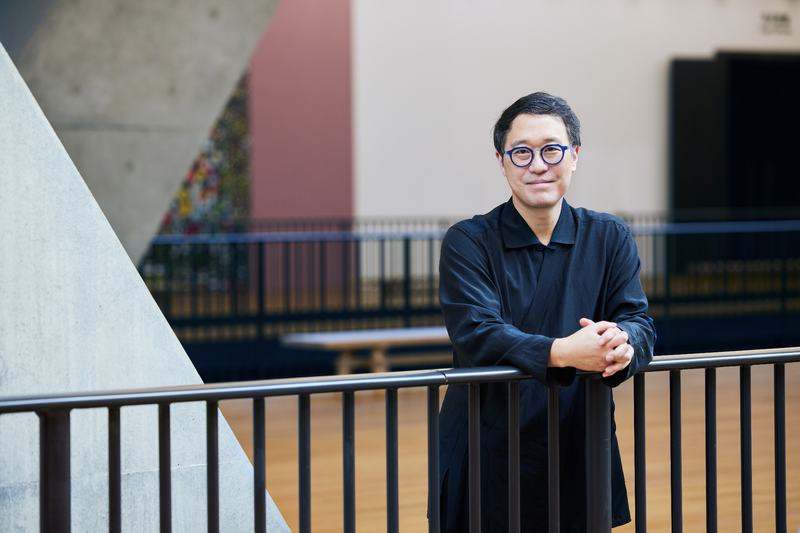
Doryun Chong

Doryun Chong

Doryun Chong, Artistic Director and Chief Curator, M+, Hong Kong SAR, China. Photo: Dan Leung. Image courtesy of M+, Hong Kong

Doryun Chong is Artistic Director and Chief Curator, M+, Hong Kong, Asia’s first global museum of visual culture of the 20th and 21st centuries. He joined M+ in September 2013 as its inaugural Chief Curator and also became Deputy Director, Curatorial in January 2016. Since October 2024, he has served as Artistic Director. He oversees all content-related aspects, including exhibitions, collections, learning and interpretation, publishing, and digital content, across the museum’s three main disciplinary areas of design and architecture, moving image, and visual culture.

Before joining M+, Chong developed his museum career in the United States. He studied art history and anthropology at the University of California, Berkeley, where he also completed graduate work in art history focused on non-Western modern and contemporary art, particularly in East Asia. He has held curatorial positions at the Asian Art Museum of San Francisco, the Walker Art Center in Minneapolis, and the Museum of Modern Art in New York.

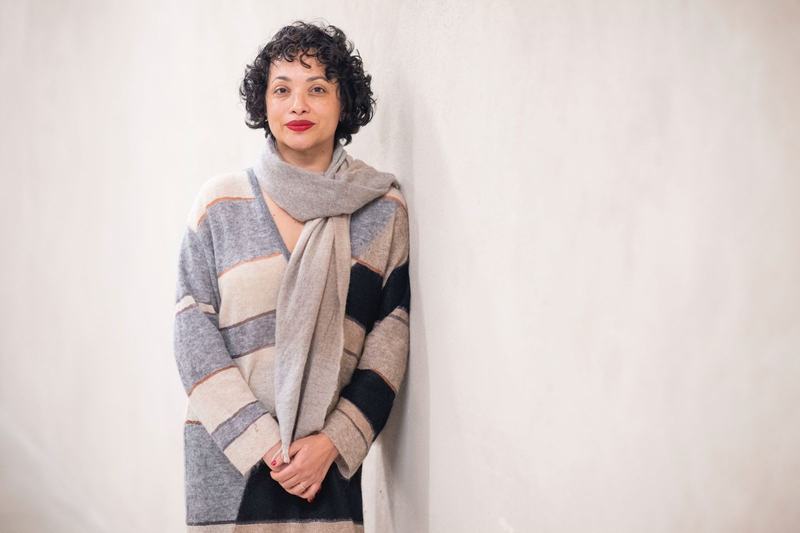
Amanda de la Garza Mata (Mexico, 1981) Lives and works in Madrid, Spain.

Amanda de la Garza_CIMAM President 2026-28

Amanda de la Garza. Deputy Artistic Director, Museo Nacional Centro de Arte Reina Sofía (MNCARS), Madrid, Spain

She is currently Deputy Artistic Director at Museo Nacional Centro de Arte Reina Sofía in Madrid. She is the President of CIMAM (International Committee for Museums and Collections of Modern Art) for the period 2026-2028. From 2020 to 2024, she was General Director of Visual Arts and of the University Museum of Contemporary Art (MUAC) at UNAM in México City, one of the most important art museums in Latin America. Trained in Curatorial Studies, Art History, Anthropology and Sociology, between 2012 and 2019 she worked as an associate curator at MUAC. She has curated and coordinated more than 30 exhibitions of modern and contemporary art, archival exhibitions, and public art projects. She has published essays, interviews and reviews in catalogues, books and specialized magazines. She was a member of the board of ICOM Mexico from 2021 to 2024.

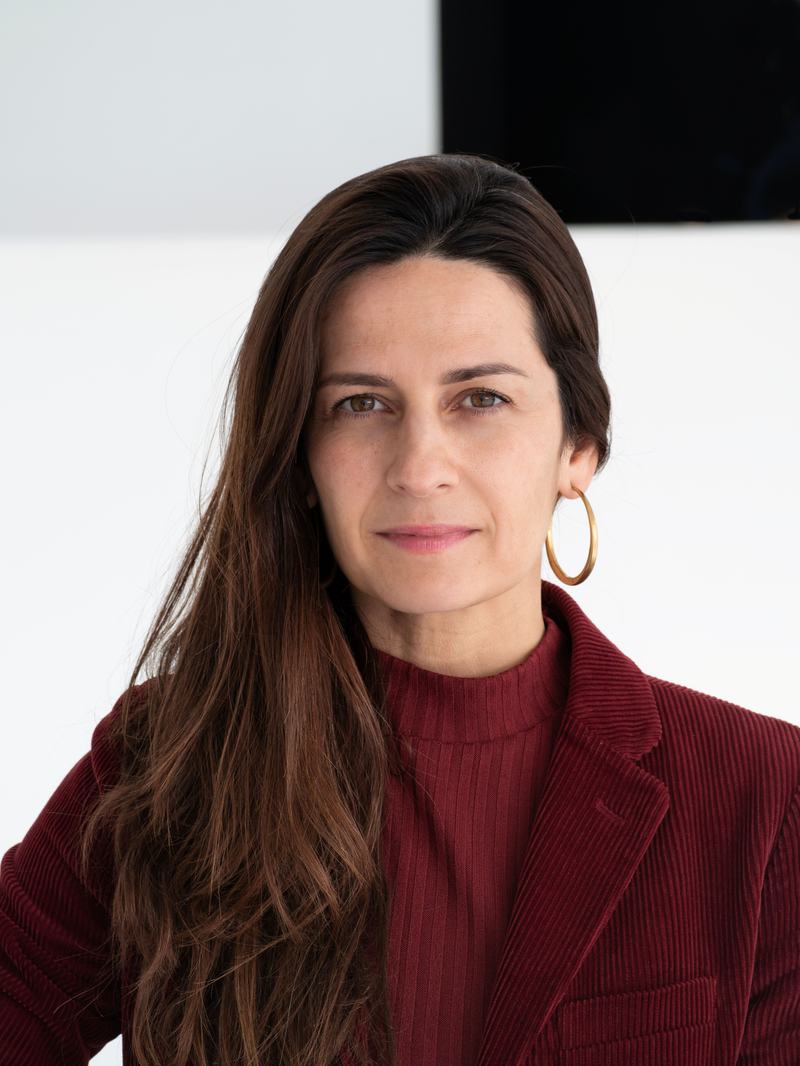
Claudia Segura Campins

P1170077p

Claudia Segura Campins (Barcelona, 1984) is currently Head of Collection at MACBA (Museu d’Art Contemporani de Barcelona), following her role as Curator of Exhibitions and Collection at the same institution since 2019. Her curatorial work includes several presentations of MACBA’s Collection, as well as numerous solo exhibitions, most notably the first monographic exhibition of performance artist María Teresa Hincapié.

She holds a BA in Humanities from Pompeu Fabra University in Barcelona (2007) and an MA in Contemporary Art Theory from Goldsmiths, University of London (2008). From 2015 to 2019, she was Director and Chief Curator of NC-arte in Bogotá, Colombia, where she curated numerous site-specific projects by artists such as Amalia Pica, Luis Camnitzer, Xavier Le Roy, Nicolás Paris, Nicolás Consuegra, Los Carpinteros, Do Ho Suh, and Alia Farid, among others.

Previously, she worked as a cultural project coordinator at Fundación “la Caixa” in Barcelona (2010–2012), served as an external curator for the Mardin Biennial in Turkey (2014–2015), and acted as mentor at the Sala d’Art Jove in Barcelona (2014) and at the Cano Laboratory at the National University Museum in Bogotá (2018). She was also a visiting lecturer at the Universidad de los Andes in Bogotá (2017).

She has curated projects in Spain, Colombia, Los Angeles, Chicago, Mexico City, Turkey, Lisbon, Miami and London. She frequently contributes to exhibition catalogues, gives lectures, and writes for specialized art publications.

Moderator:

Montse Badia

Montse Badia

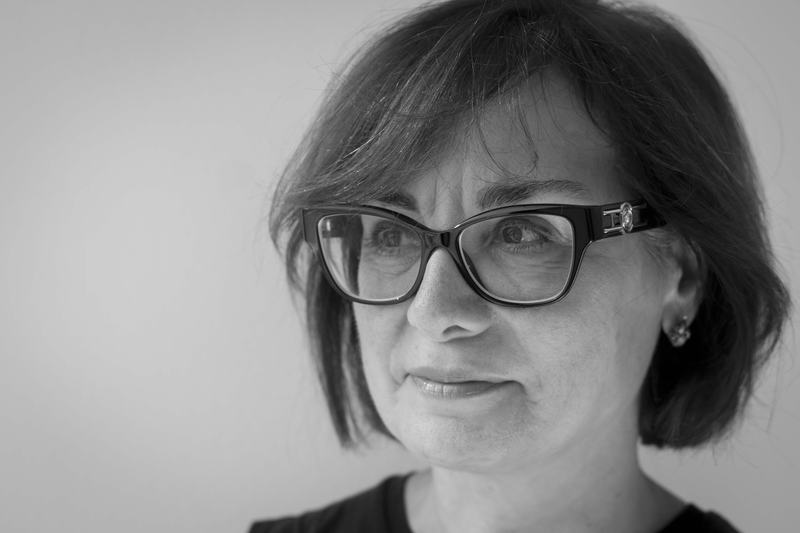
Montse Badia. Photo by Agus Izquierdo.

Montse Badia is an art historian, critic, curator, and cultural researcher based in Barcelona.

She has contributed to numerous international publications, including Transversal, arts.zin, Untitled (London), NU: The Nordic Art Review (Stockholm), Tema Celeste (Milan), ARCO, and Bonart. Her curatorial work has been presented at institutions including De Appel (Amsterdam), Apexart (New York), Künstlerhaus Bethanien (Berlin), Fundació Joan Miró, MACBA – Museu d’Art Contemporani de Barcelona, MNAC – Museu Nacional d’Art de Catalunya and Fundación “la Caixa”, among others. She has served as associate curator of Espai 13 at Fundació Joan Miró and of the Centre d’Art Santa Mònica. She has also been a member of the advisory committee of the Yaxs Foundation and artistic director of the contemporary art collection Cal Cego.

She is co-founder and director of A*DESK. Independent Institute of Criticism and Contemporary Art, and director of the Master’s Degree in Contemporary Art: Context, Mediation and Management at IL3 – Universitat de Barcelona.

Recently she has also participated in several studies on the Catalan contemporary art ecosystem commissioned by CONCA (Catalan National Council for Culture and the Arts) and served as rapporteur for the framework document on remuneration standards for visual arts professionals promoted by the Government of Catalonia.

Montse Badia is a member of AICA (International Association of Art Critics) and ACCA (Catalan Association of Art Critics).


1st Plenary Session of the Public System of Visual Arts Facilities

Culture and Rights for Democratic Health

MACBA Convent Auditorium – June 30, 2026.

This event is structured around two interconnected themes.

The first explores the relationship between the visual arts and individual, social, and community health.

The second addresses cultural rights as inalienable rights for everyone.

Both dimensions converge on a shared conviction: culture acts as an active force against distress, individualistic withdrawal, and the rise of regressive trends.

Organized by: Directorate General for Cultural Rights, Creation, and Libraries, Department of Culture, Government of Catalonia.

Welcome and introduction by Xavier Fina, Director General for Cultural Rights, Creation, and Libraries.

Conversations:

• Art as an active force in medical and care settings. Conversation between Sergi Blancafort and Montserrat Verdú, with Pilar Cruz.

• Art and health through artistic practices. Conversation facilitated by José Antonio Delgado with Gemma Paris and Felipe G.

• Art as an active force for community health. Conversation between Javier Rodrigo and Quim Packard.

• Art for democratic health. Conversation facilitated by Amanda Cuesta with Mar Sureda and Nerea Campo.

• Economic health in artistic practices. Presentation on professional remuneration scales with Montse Badia and Ester Martínez.

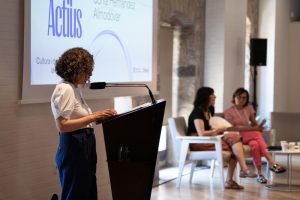
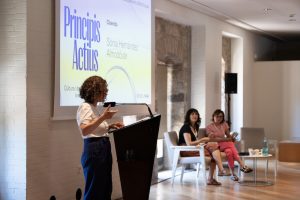
Institutional closing remarks by the Hon. Sònia Hernández Almodóvar, Minister of Culture of the Government of Catalonia.


Photos Xavier Menal

Interview with Carmen Corbera for the podcast El Mundo del Arte.

March 2026.